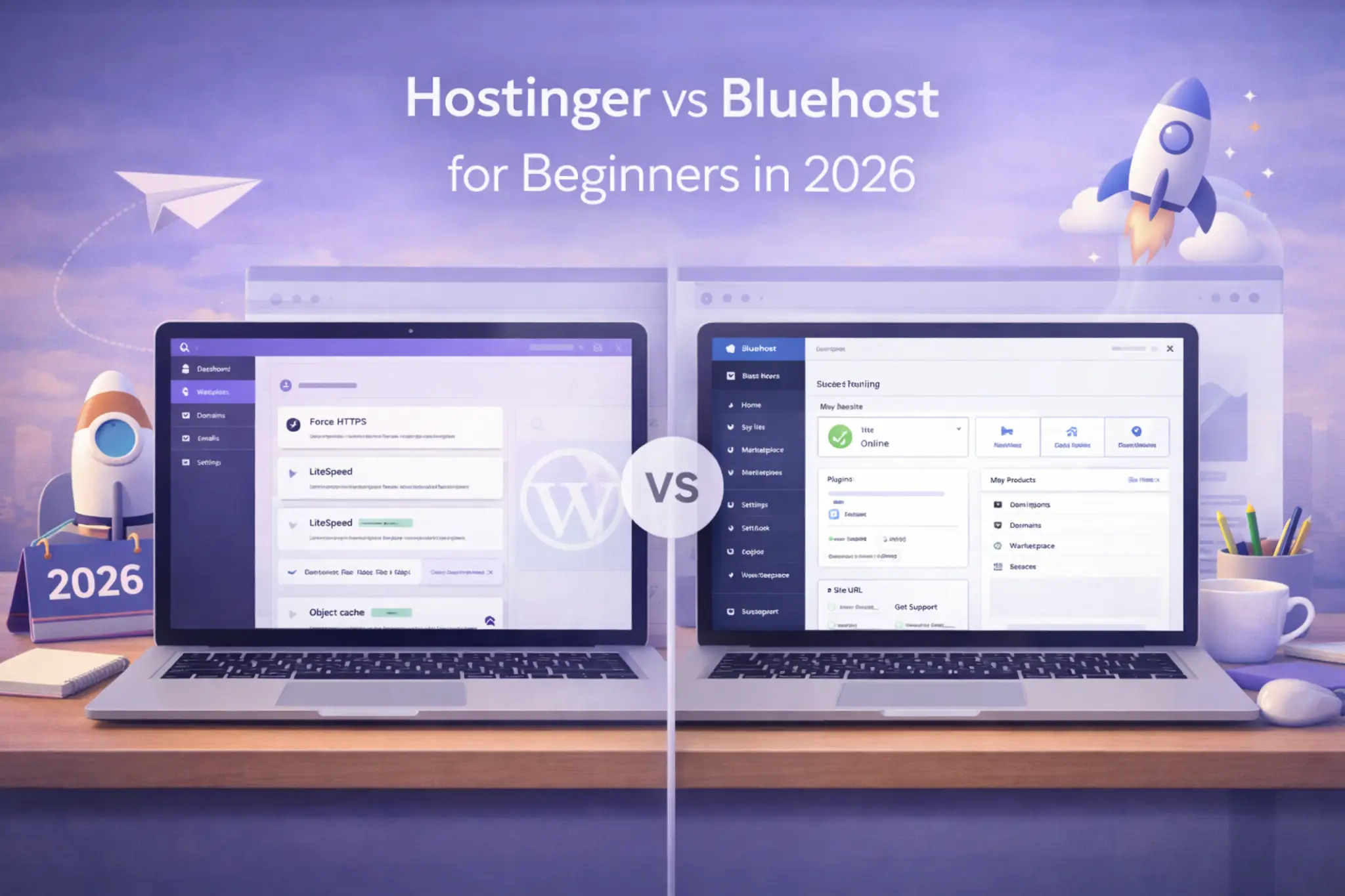
Hostinger vs Bluehost for Beginners in 2026: Which One Is Better?
If you are launching your first website, the choice between Hostinger and Bluehost is not about which brand sounds bigger. It is about which hosting provider makes the first year easier for a beginner.
Most new site owners need four things: clear pricing, simple setup, enough WordPress tools to launch safely, and support that matches how they prefer to get help. This comparison focuses on those practical differences so you can choose the better option for your first WordPress site, small business website, or simple content project in 2026.
Affiliate Disclosure: This article may contain affiliate links. If you buy through them, we may earn a commission at no extra cost to you. We only recommend tools that fit the use case.
How we verified: We reviewed public pages, positioning, and beginner-facing differences between Hostinger and Bluehost, focusing on plans, dashboards, support style, WordPress fit, and checkout logic.
Quick Verdict (TL;DR)
For many beginners, Hostinger makes more sense if your priority is lower entry cost, a more modern dashboard, and a cleaner budget-friendly start.
Bluehost makes more sense if you care more about its long-standing WordPress association, phone support access, and a more traditional hosting-provider feel.
If you want the simplest short answer:
- Choose Hostinger if you want better value and a leaner start.
- Choose Bluehost if you want stronger WordPress familiarity and more traditional support channels.
Either can work for a first blog, a brochure site, or a simple small business project.
The better choice depends on how you want the first year to feel.
Why do beginners compare Hostinger and Bluehost so often?
The comparison is common because both companies target almost the same kind of buyer: bloggers, small business owners, first-time site owners, creators, and WordPress beginners who want a site online without learning server administration first.
Both offer shared hosting, WordPress-focused plans, SSL, beginner-oriented setup, and bundled starter offers. That is why so much comparison content exists around them.
The real decision is not whether both can run WordPress. They can. The better question is which hosting provider fits your workflow, your budget, and your support expectations better.
That is why the real comparison comes down to pricing, ease of use, support style, and how comfortable the first year feels after checkout.
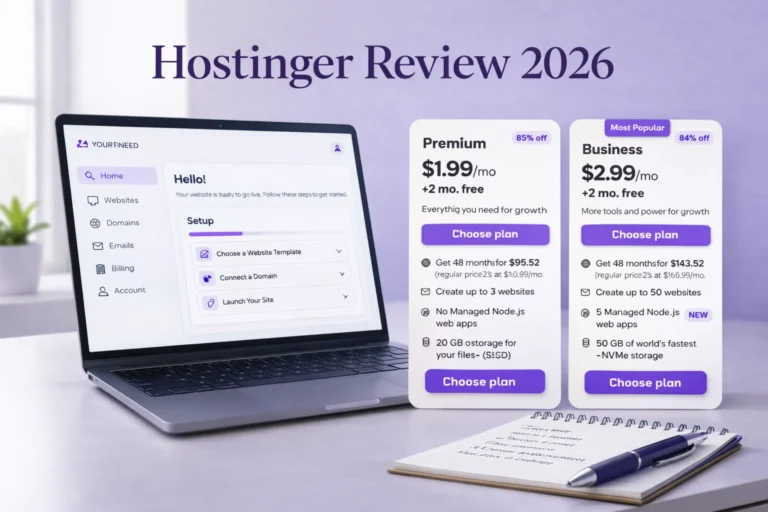
How do Hostinger and Bluehost compare on pricing and renewals?
Pricing is where beginners notice the first big difference.
Hostinger generally feels more budget-friendly at the entry level. It tends to appeal to users who want affordable hosting and lower first-year friction.
Bluehost also uses promotional pricing, but as with most hosting services, the first-term price is not the full long-term story. The better comparison is not just “who is cheaper today?” but “which provider still makes sense after checkout and renewals?”
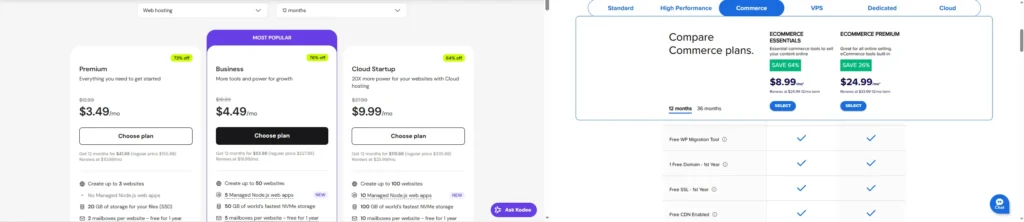
Beginners should compare:
- intro price
- renewal price
- contract length
- free domain terms
- checkout add-ons
- what the plan actually includes
If early budget control matters most, Hostinger often has the edge. If familiarity and support style matter more, Bluehost may still be worth the extra cost.
Free domain offers, SSL, and migration help are useful, but they should not drive the whole decision on their own. For a deeper look at long-term costs, review our guide to web hosting renewal costs. For most beginners, pricing clarity, renewal terms, checkout add-ons, and the overall setup experience matter more.
Which one is easier to use for a first WordPress site?
For many beginners, Hostinger feels easier to use.
Hostinger’s hPanel gives it a more modern and lightweight feel. For a first-time site owner, that cleaner dashboard can reduce friction and make common tasks feel less intimidating.
Bluehost takes a more traditional hosting-provider approach while leaning heavily into WordPress onboarding and WordPress branding. That can feel safer to users who want a provider strongly tied to the WordPress ecosystem.
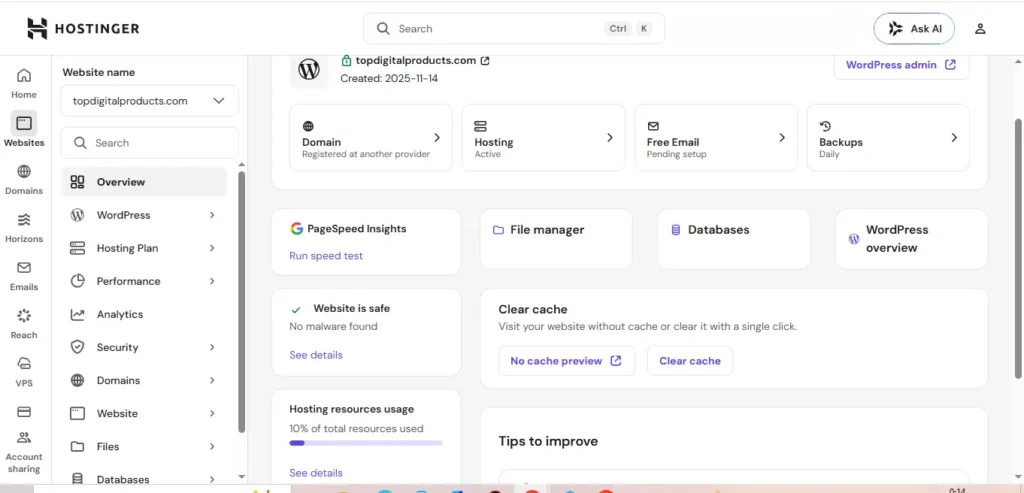
So the practical split is simple:
- if you want less visual clutter, Hostinger often feels easier
- if you want a more traditional hosting experience, Bluehost may feel more familiar
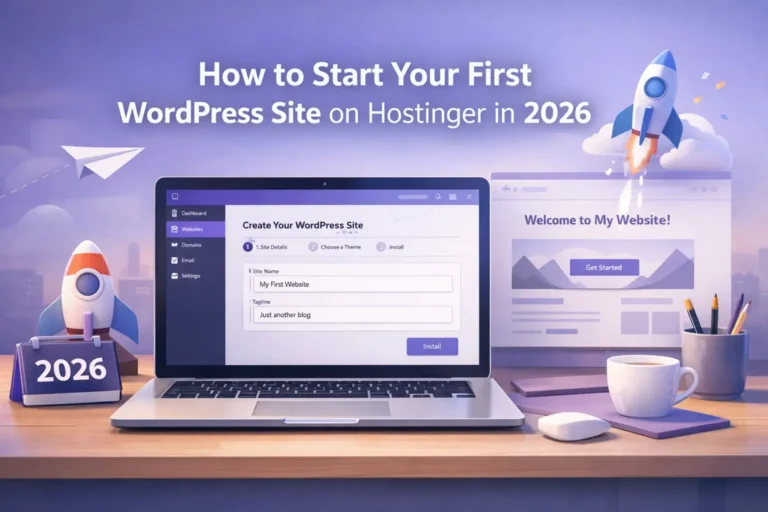
For most beginners, this also shapes the WordPress experience. Hostinger usually feels cleaner and lighter, while Bluehost feels more traditional and more closely tied to WordPress branding. Both can work for a first site, but the better fit depends on whether you value simpler usability or stronger familiarity. If you choose Hostinger, follow our guide to start your first WordPress site on Hostinger.
How does customer support differ?
Support style is one of the most meaningful differences.
Hostinger relies heavily on live chat and online resources. That can work well if you are comfortable solving problems through docs and chat-based help.
Bluehost stands out because many beginners value its broader support feel, especially if they prefer more traditional support channels alongside chat.
This makes the decision simple:
- if live chat and self-help docs are enough, Hostinger may be fine
- if you strongly prefer phone-based reassurance, Bluehost is the more comfortable choice
Support style is not a minor detail. It affects confidence when something goes wrong.
What about performance and speed?
Performance matters, but it is also where weak evidence often becomes overconfident marketing.
The honest beginner answer is simple: do not choose only on vague promises about speed. Theme quality, images, plugins, cache setup, visitor location, and site structure all affect real results.
A clean WordPress site on a decent host usually beats a messy site on a supposedly “faster” host.
Who should choose Hostinger?
Hostinger is better for users looking for:
- affordable hosting
- a lower entry price
- a modern dashboard
- simple hosting for a first project
- a budget-friendly start without too much complexity
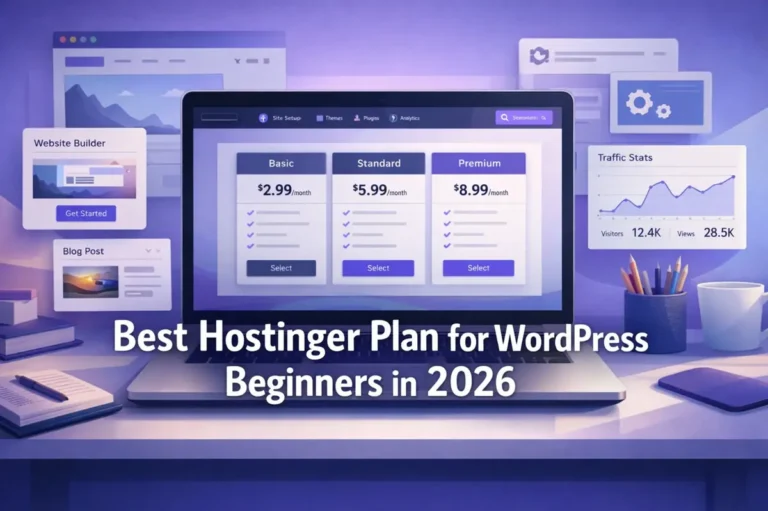
If Hostinger fits your needs, compare the best Hostinger plan for WordPress beginners before choosing a plan.
Where Hostinger is weaker
- no phone-first support model
- less traditional feel for buyers who expect old-school hosting dashboards
- may feel less reassuring to users who trust WordPress branding more than usability
Who should choose Bluehost?
Bluehost is better for users who want:
- stronger WordPress familiarity
- broader support expectations
- a more traditional hosting-provider feel
- more comfort from brand recognition
Where Bluehost is weaker
- usually less attractive on entry-price positioning
- can feel less lightweight than Hostinger
- checkout and upsell choices may matter more than many beginners expect
Which one makes more sense in 2026?
Final Verdict for Beginners in 2026
For many beginners, Hostinger is the better default choice in 2026. It usually makes more sense if you want a lower starting cost, a cleaner dashboard, and a simpler first-year experience.
Bluehost is still a valid option for beginners who care more about traditional support expectations, stronger WordPress familiarity, and the comfort of a more established hosting-provider feel.
In short, choose Hostinger if you want better value and a leaner start. Choose Bluehost if support style and WordPress familiarity matter more than the lowest starting price.
The better choice is the one that makes your first year easier.
FAQs
Is Hostinger vs Bluehost a close comparison for WordPress?
Yes. Both target WordPress users and beginners, but Hostinger often suits budget-focused buyers more, while Bluehost appeals more to users who value traditional support and stronger WordPress familiarity.
Do both come with a free domain?
Often yes, depending on the plan and billing term. Always confirm the exact plan and renewal conditions before buying.
Do both include free SSL?
Yes. Free SSL is effectively a baseline expectation on beginner hosting plans today.
Which one is better for a beginner launching a first WordPress site?
Hostinger is often better for a beginner who wants lower upfront costs and a cleaner modern dashboard. Bluehost is better for a beginner who wants more traditional familiarity and broader support reassurance.
Are shared hosting plans enough for a first website?
Usually yes. Shared hosting is enough for many first blogs, brochure sites, and early small business projects.
Is Hostinger or Bluehost better value for the first year?
For many beginners, Hostinger is usually the better value for the first year because it tends to offer a lower entry price and a leaner setup experience. Bluehost can still make sense if you value broader support expectations and stronger WordPress familiarity more than the lowest starting cost.
Conclusion
If you want the simpler and more budget-friendly starting point, Hostinger is usually the better choice for most beginners. If you care more about traditional support expectations and stronger WordPress familiarity, Bluehost may feel more comfortable.
Before you buy, review the current checkout, confirm renewal pricing, and choose the host that matches the way you want your first year to feel.